Recovered from a shipwreck in 1900–1901, the Antikythera mechanism survives as corroded bronze fragments. Imaging and inscriptions revealed an intricate astronomical calculator. Its gearing represented celestial and calendar cycles, including a system for predicting eclipse possibilities using the 223-month Saros cycle. The National Archaeological Museum places its creation around 150–100 BCE. Researchers have produced reconstructions, while missing parts leave aspects of the original design unsettled. Its power comes from what actually survives: a sophisticated mechanical expression of ancient astronomical knowledge, hidden for centuries in an apparently unremarkable mass of corrosion.
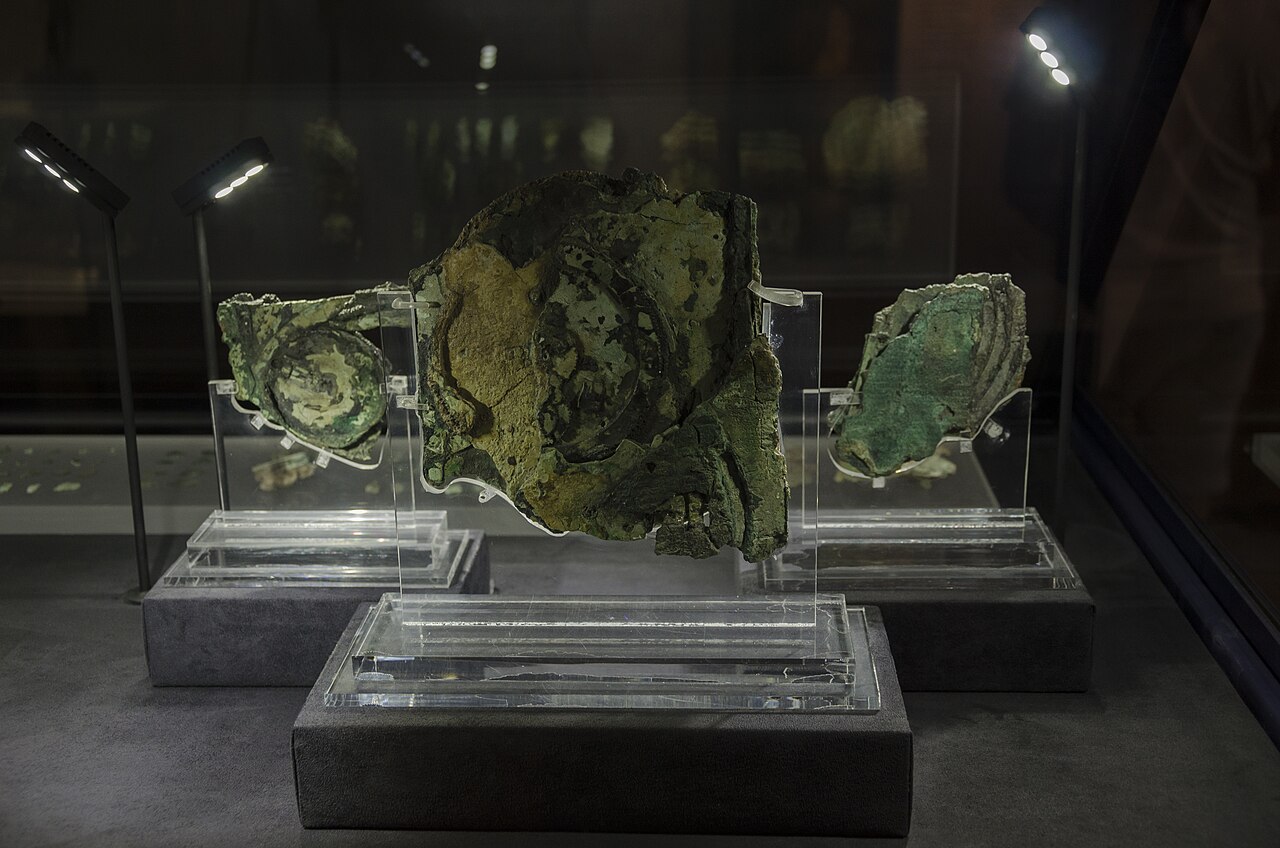
The mechanism’s surviving gears demonstrate a level of mathematical and mechanical design that would be easy to dismiss without the object. Corrosion obscured the structure; imaging and the study of inscriptions made its astronomical functions progressively more legible.
The surviving fragments limit a full reconstruction. Proposed arrangements must fit the physical evidence, inscriptions and available space. This is remarkable ancient engineering, not proof of a lost industrial civilisation. The object expands what we know about particular technical traditions while leaving questions about workshops, manufacture and transmission.
The established record.
- 01
Recovered during the 1900–1901 shipwreck salvage.
- 02
Inscriptions and tomography helped decode its functions.
- 03
Its eclipse dial used the 223-lunar-month Saros cycle.
How the story unfolded.
- Ancient manufacture
An astronomical mechanism is built
The device encodes astronomical cycles using gears.
- 1900–1901
The wreck and fragments are recovered
The corroded object enters the archaeological record.
- Modern imaging
Functions become clearer
Internal structure and inscriptions inform competing reconstructions.
Where the evidence stops.
“Computer” describes an analogue astronomical calculator, not electronics. Some mechanisms are reconstructed from incomplete evidence; creator, precise date and missing components remain debated.
Read the original sources.
The source may establish a narrower point than the headline. Follow the specific finding, its date and its limitations.
What else might have existed in a technical tradition represented by one exceptional survivor?